
The Law of Hospitality and Its Violations
The OdysseyThe theme of xenia (hospitality) as a central moral code, both honored and violated throughout the poem.
increasing Bearing strength in each event
 decreasing
Bearing strength in each eventdecreasingViolations by the Suitors
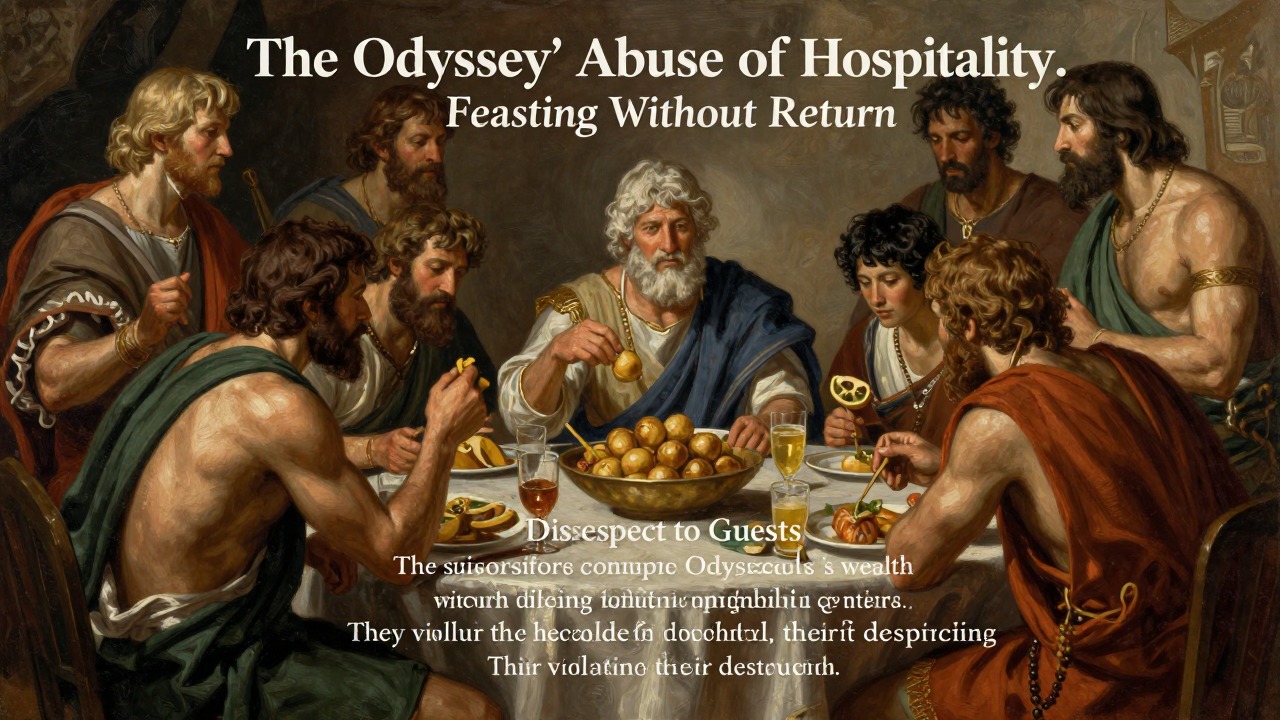
The Suitors' Abuse of Hospitality
Feasting Without Return
The suitors consume Odysseus's wealth without offering anything in return.
Disrespect to Guests
They abuse the disguised Odysseus, violating the code of hospitality.
The Consequence
Their violation leads to their destruction.
Good Hospitality: Phaeacians
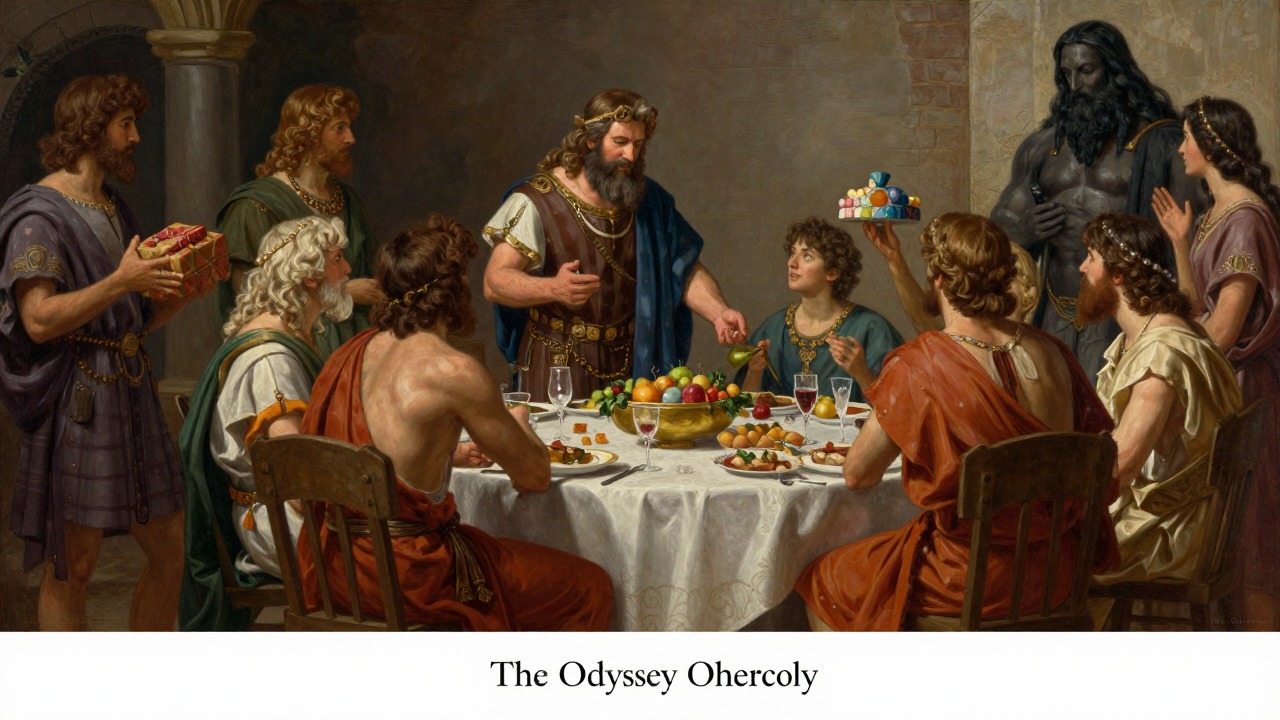
The Phaeacians' Generosity
Welcoming Odysseus
Alcinous and Arete treat Odysseus with great honor, giving him gifts and an escort.
The Feast and Games
They entertain him with feasts and games.
The Reward
Their hospitality is rewarded by Odysseus's stories, but they are punished by Poseidon.
Good Hospitality: Eumaeus
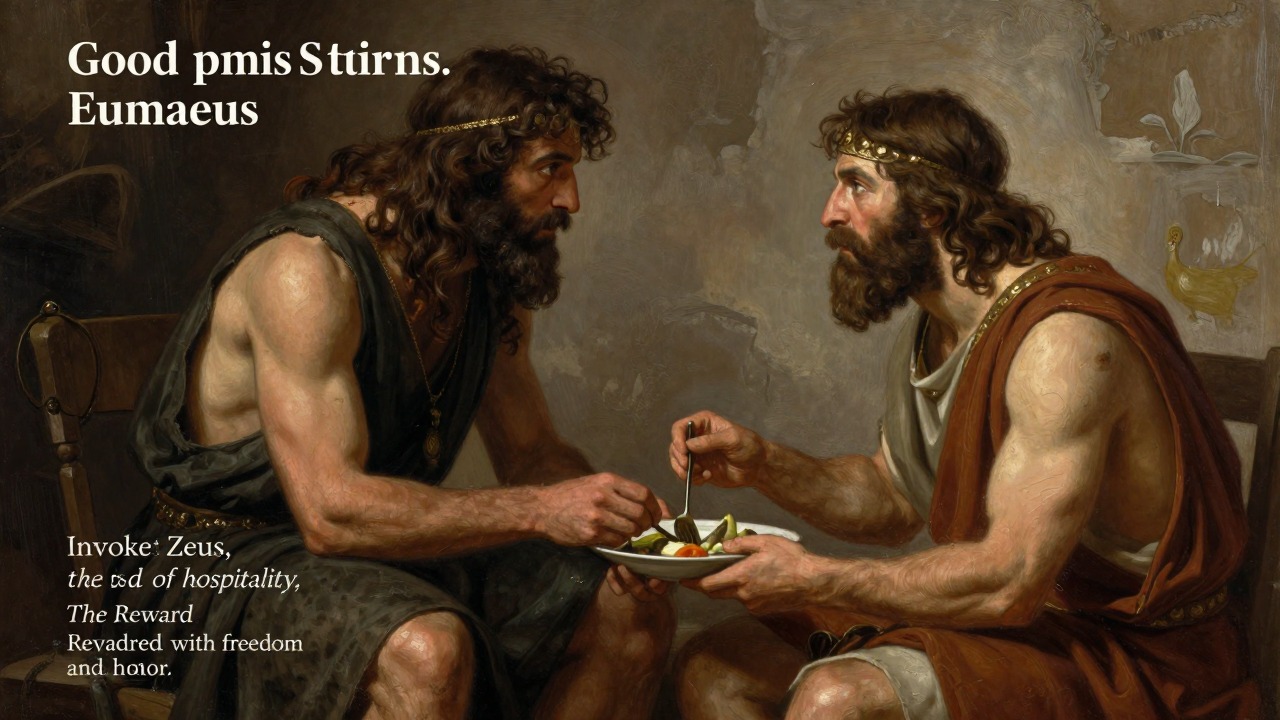
The Swineherd's Kindness
Sharing His Home
Eumaeus welcomes the beggar and shares his meager food.
Respect for Zeus
He invokes Zeus, the god of hospitality.
The Reward
Eumaeus is rewarded with freedom and honor.
Violations by the Cyclops
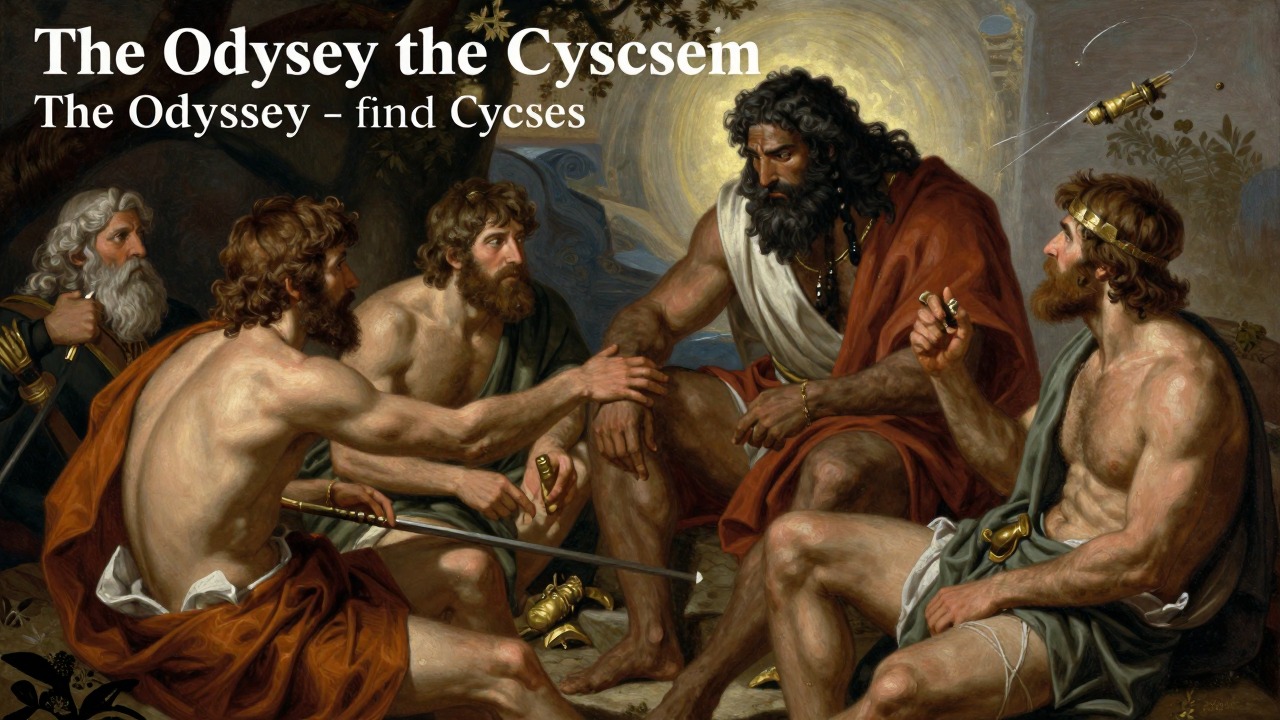
Polyphemus's Inhospitality
Eating Guests
Polyphemus eats Odysseus's men instead of offering hospitality.
Ignoring Zeus
He claims the Cyclopes are stronger than the gods.
The Punishment
He is blinded and cursed.
Throughout the story
During Odysseus's stay in Scheria
After Odysseus's return to Ithaca
During the Cyclops episode
